

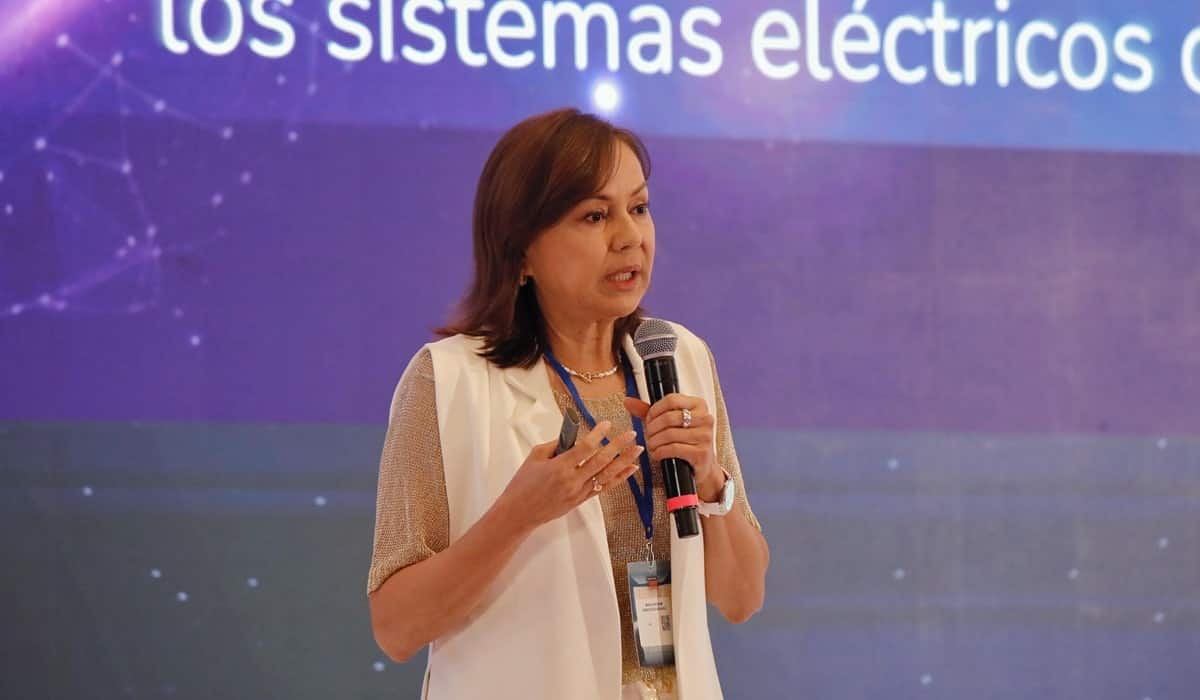
The general manager of XM, María Nohemí Arboleda, spoke with Valora Analitik about the impact of new technologies on energy demand.
Energy demand in Colombia is growing at an accelerated pace, driven by factors such as the electrification of transport, the expansion of national coverage, industrial development, and the boom in energy-intensive technologies, such as Artificial Intelligence (AI).
According to the Mining-Energy Planning Unit (UPME), a growth of close to 25% in national energy demand is projected toward 2033.
This scenario represents a complex challenge for the Colombian electricity sector, which is in the midst of a transition toward a more diversified, decentralized, and environmentally sustainable generation model.
To meet this growing demand, the installed capacity of the National Interconnected System (SIN) will need to increase from the current 21.5 gigawatts (GW) to 37.7 GW in less than a decade. More than 87% of that new capacity is expected to come from non-conventional renewable sources, such as solar and wind, according to the Energy and Gas Regulatory Commission (CREG).
Artificial Intelligence and its Impact on Energy Demand
One of the emerging factors most influencing demand is the accelerated expansion of data centers, cloud services, and AI applications.
During the Seventh XM Forum, the general manager of XM, María Nohemí Arboleda, spoke with Valora Analitik about the impact of new technologies on the energy system:
“Data centers and services associated with artificial intelligence will demand increasing consumption, with special requirements for continuity and quality. This forces us to prepare the grid for conditions that were not previously considered.”
At the same time, AI is also being implemented as an optimization tool within the sector itself (for modeling operation scenarios, forecasting failures, and managing large volumes of information). However, its adoption also opens the door to new cybersecurity risks.
“In addition to the benefits of AI, we must consider the risks. Cyberattacks on energy systems have already occurred in other countries, such as in Ukraine. That forces us to reinforce data protection protocols in the Colombian electrical system,” Arboleda added.
Energy Reserves in the Country
One of the most critical aspects of the energy outlook is the current state of energy reserves. While no supply problems are anticipated in the short term, the signals are clear: the reserve margin has decreased, and new projects face multiple obstacles.
“We are seeing delays in the execution of generation projects, especially those based on non-conventional sources. The causes are varied: social conflicts, environmental difficulties, slow regulatory processes. All of that has limited the expansion of the system,” Arboleda explained.
This has generated concern about the system’s sufficiency in the medium term. “We cannot rest easy. We must act now to guarantee the supply in a few years. Decisions that are not made today could translate into imbalances tomorrow,” she warned.
Sustainability: Beyond Clean Generation
Parallel to the growth in demand and the modernization of the system, the sector must address environmental sustainability commitments. While the use of sources like the sun and wind reduces polluting emissions, it also brings new challenges.
“The use of resources such as the sun, wind, or biomass is positive, but we must consider other impacts. What do we do with battery or solar panel waste? How is the required space managed?” Arboleda pointed out.
Added to this is the impact of climate change on the grid. Extreme events such as droughts or floods affect the capacity of hydroelectric generation—still dominant in Colombia—and can jeopardize the system’s stability.
“Many recent international failures have been due to climate change. We must have a diversified, resilient, and responsive matrix to unforeseen events,” she concluded.
Source: Energía – Valoraanalitik.com