

With a projected 25% growth in energy demand by 2033, this year is decisive for defining the course of the Colombian energy system.
Facing sustained growth in electricity demand and the challenges imposed by the energy transition, the Mining-Energy Planning Unit (UPME) has proposed an ambitious project awarding plan to ensure the energy supply in Colombia.
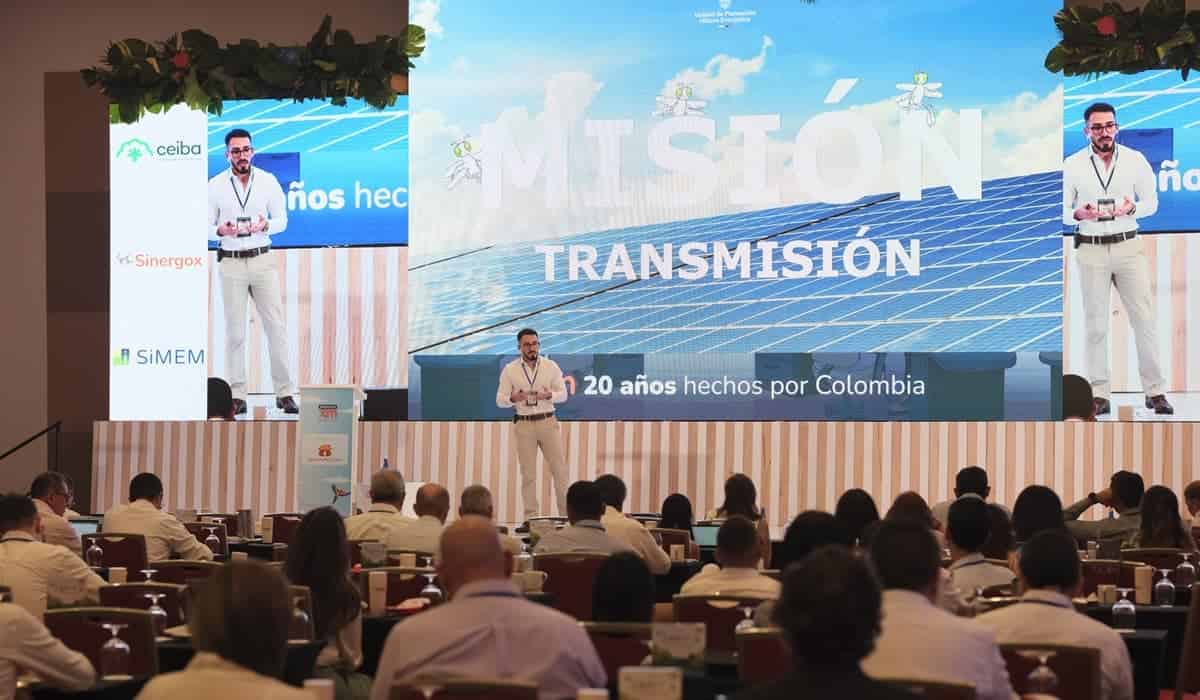
This was stated by Andrés Peñaranda, advisor to the UPME General Directorate, in a conversation with Valora Analitik during the Seventh XM Forum.
“The goal for this year is to move from planning to implementation. We are in phase one of Mission Transmission, which involves a very broad set of works. The objective is to award and open 20 infrastructure tenders during 2025,” Peñaranda explained.
To date, UPME has already advanced in 14 tenders (including openings and awards) and expects to meet the goal of 20 before the end of the year.
Among these, the recently announced project is highlighted, aimed at reinforcing the electrical system in the Sabana Norte area of Bogotá, a region that has faced supply restrictions and has been at the center of public debate due to the risk of potential blackouts.
“This work will directly impact the system’s current limitations in the eastern region. It seeks to mitigate the bottlenecks that occur in meeting the growing demand of Bogotá and its metropolitan area,” the official noted.
Short- and Long-Term Infrastructure
Peñaranda acknowledged that the execution of large-scale projects has been facing longer implementation times. “Before, they took about four years; now they can take five or even six, and we’ve seen how these delays translate into additional pressures on system operation.”
Facing this scenario, the focus of Mission Transmission includes short-term solutions, such as the installation of batteries, new high-temperature conductors, and emerging technologies, which can offer operational relief in one or two years, while the large structural works are finalized.
“It’s not just about building more lines, but about adapting the system with modern technologies that allow us to maintain stability and reliability in the energy supply,” he pointed out.
Renewables: A Commitment to Double Installed Energy Capacity
Another key front for guaranteeing the energy supply in Colombia is the promotion of non-conventional renewable generation sources.
Currently, UPME has 20 gigawatts (GW) of capacity approved, of which approximately 95% corresponds to solar and wind projects.
“These 20 gigawatts represent a doubling of the system’s current capacity, which stands at about 11,000 megawatts (MW). The goal is to coordinate efforts to break down the barriers that are hindering the entry of these projects and accelerate their implementation,” Peñaranda stated.
This push is part of the Plan 6G, promoted by the Ministry of Mines and Energy, which seeks to rapidly reactivate and expand national energy capacity, especially through clean sources.
Are Renewable Energies a Risk to Stability?
Amidst the international debate on the reliability of renewable sources—especially after blackouts recorded in countries like Spain—Peñaranda was clear in his position:
“There is no technical evidence to show that non-conventional renewables cause blackouts. What there is, is a need to adapt the system so that these technologies work correctly.”
The shift in the energy paradigm requires a profound transformation of the electrical system. To achieve this, elements must be integrated to maintain stability against disturbances and prevent operational collapses.
“We are at a stage where technology is constantly evolving, and the system must evolve with it. The key is to adapt, not to slow down the transition,” he affirmed.
With a projected 25% growth in energy demand by 2033 and an increasingly complex ecosystem due to the digitalization and electrification of transport and industry, 2025 is presented as a decisive year for defining the course of the Colombian energy system.
Source: Energía – Valoraanalitik.com